You found the perfect Lake Las Vegas home with a view you can’t stop thinking about. Before you remove contingencies, you want to know exactly what title insurance will and will not cover in a resort-style master plan. You’re smart to ask. A clear understanding today can prevent costly surprises later. In this guide, you’ll learn how title insurance works in Nevada, what to watch for with HOAs and shoreline rights at Lake Las Vegas, and the steps to take before you commit. Let’s dive in.
What title insurance covers in Nevada
Title insurance protects you from losses caused by covered defects that existed before you took ownership. It is not like home or flood insurance, which covers future events. Title insurance addresses issues in the chain of title and recorded encumbrances that come to light later.
You typically see two policies in a financed purchase. A lender’s policy protects your lender’s security interest up to the loan amount. An owner’s policy protects your equity and ownership interest up to the policy amount, usually the purchase price. Premiums are a one-time cost at closing and Nevada regulates forms and rates through the state’s Division of Insurance.
An owner’s policy usually stays in force as long as you hold title. It can also cover certain defense costs if a covered claim arises. The lender’s policy does not protect you, only your lender, so most buyers choose to add an owner’s policy for complete protection.
Owner’s policy vs. lender’s policy
- Owner’s policy: Covers your ownership interests up to the policy amount. Helps with legal defense and indemnity for covered defects.
- Lender’s policy: Required by most lenders. Covers the lender up to the loan balance. It does not protect your equity.
- Payment and timing: Both policies are paid once at closing. Only the owner’s policy remains for as long as you own the property.
What you receive during the title process
- Title search and exam: The title company reviews public records for deeds, liens, judgments, easements, plats, and more.
- Title commitment: This preliminary document shows the conditions to satisfy before closing and the exceptions that will not be covered. Pay close attention to Schedule B.
- Policy issuance: After closing and meeting all listed requirements, the title company issues the final policy or policies.
Exceptions Lake Las Vegas buyers must review
Every title commitment lists exceptions that the policy will not cover. At Lake Las Vegas, where properties sit within a master-planned resort community, some exceptions are more common and more important to understand.
Standard exceptions you may see:
- Taxes and assessments: Current property taxes and any special assessments not yet payable are commonly excepted until paid at closing.
- Recorded easements and rights-of-way: Utility easements, road easements, access easements, and similar recorded rights.
- CC&Rs and HOA declarations: Recorded rules that govern use, design, and maintenance within the community.
- Matters of public record: Liens, judgments, recorded mechanics’ liens, and UCC filings.
- Unrecorded matters: Claims not of record are often excluded unless you secure a specific endorsement.
- Survey and possession issues: Standard policies do not guarantee boundary lines or cover encroachments without survey-based coverage.
Resort-specific issues to watch:
- Shoreline and lakebed rights: Recorded reservations or easements for lakebed, shoreline, docks, or lake access often appear as exceptions. Unrecorded water-use claims are typically excluded.
- Master-plan assessments: Community facility liens or special assessments for shared amenities may be noted or excepted.
- Rental and use restrictions: CC&Rs may limit short-term rental or dictate minimum lease terms. This matters for second-home and investment plans.
- Maintenance and access easements: Shoreline maintenance, seawalls, drains, and paths can carry recorded easements across or along lots.
How to read Schedule B
- Part I: Requirements. These are items to clear before closing, such as lien payoffs or association approvals.
- Part II: Exceptions. These are items your policy will not cover after closing. Review every line and ask the title officer for written clarification if anything is unclear.
- Action step: Do not remove the title contingency until you understand how each exception affects your intended use and long-term plans.
HOA and CC&R checkpoints in Nevada
Lake Las Vegas properties sit within common-interest communities governed by recorded declarations under Nevada’s NRS Chapter 116. These documents shape how you can use your property and what you pay to maintain shared amenities.
Key HOA items to verify:
- Estoppel letter: Request a current HOA estoppel that shows dues, special assessments, violations, and whether the seller is current.
- Assessment liens: Associations have lien rights for unpaid assessments under NRS 116. Confirm there are no unpaid balances and ask about any proposed special assessments.
- Rental rules: Review CC&Rs for rental restrictions that could affect second-home or investment strategies.
- Architectural controls: Confirm design review standards, approval timelines, and any rules tied to docks, shoreline structures, or storage.
- Capital projects: Ask for recent board communications to learn about planned repairs or upgrades that might affect fees.
What title insurance does and does not do for HOA risks:
- It generally insures the validity of recorded documents and your ownership interest.
- It commonly excepts compliance with HOA rules, future fee changes, or unrecorded restrictions.
- Specific endorsements may offer limited coverage for certain condo or assessment issues. Ask the title company what endorsements are available in Nevada.
Practical HOA steps before you commit
- Obtain the HOA estoppel early and review it closely.
- Read the CC&Rs, bylaws, and amendments. Ask for summaries of recent board decisions when possible.
- Confirm who controls lake-use rules, dock approvals, and shoreline maintenance: the master association, a sub-association, or both.
Waterfront and shoreline rights at Lake Las Vegas
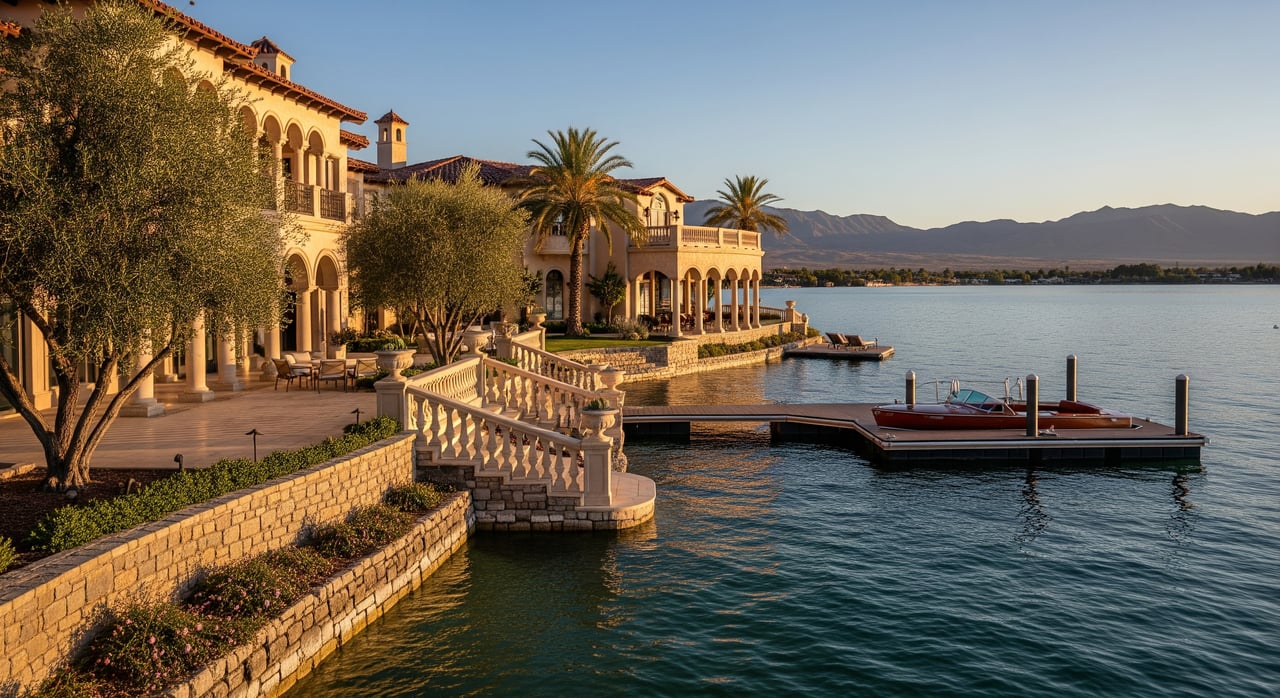
Lake Las Vegas is a man-made lake within a master-planned community. Shoreline rights do not follow the same presumptions as natural navigable waters. Do not assume you own the shoreline or lakebed because your lot touches the water.
What to verify for any waterfront lot:
Shoreline reservations: Check for recorded reservations of lakebed or littoral rights in favor of the developer, master association, or utilities.
Docks and slips: Confirm if your lot carries a recorded right to build or use a dock or slip. Separate permits or approvals may be required from the association or the City of Henderson.
Maintenance duties: Determine whether seawalls, erosion control, and dredging are owner or association responsibilities.
Public access: Identify any recorded public or association access easements along the waterfront or across your lot.
Lake operations: Review governing documents to see who manages water levels and how that might affect dock usability.
Drainage or conservation easements: Note any recorded easements that limit building or landscaping along the shore.
Endorsements and surveys for waterfront peace of mind
- Order a current ALTA survey to confirm boundaries, encroachments, and shoreline features.
- Ask the title company about survey or encroachment endorsements and whether access endorsements apply to your lot.
- Clarify if the policy can insure access to the lake or the right to existing improvements. Understand that title insurance does not cover future lake-level changes or loss of recreational use.
Buyer checklist before making an offer
- Ask the seller for the recorded deed and any prior owner’s policy if available.
- Include a title review contingency in your offer and set deadlines for CC&Rs and HOA estoppel delivery.
- Order the title commitment early and review all Schedule B items with the title officer.
- Obtain an ALTA/ACSM or boundary survey, especially for waterfront or view lots.
- Pull recorded plats and the master declaration for Lake Las Vegas from local records.
- Request HOA and master-association estoppel letters to confirm dues and any special assessments.
- Consult a local real estate attorney if exceptions involve complex shoreline reservations, public access easements, or association liens.
Ask about endorsements
Discuss these with your title officer to see what is available in Nevada and appropriate for your property:
- Survey or boundary endorsement: Helps address certain encroachments or overlaps shown on a new survey.
- Access endorsement: Insures vehicular and pedestrian access to a public way.
- HOA or condominium endorsements: Limited coverage for specific assessment or condominium matters.
- Encroachment or overlap endorsements: Can add protection where minor issues exist.
- Environmental or water-related endorsements: Availability is limited. Ask if anything applies to dock use or shoreline-specific claims.
If title issues surface
- Seller cure: Request lien releases, corrected recordings, or other cures before closing.
- Escrow holdback or endorsements: Use a holdback while a cure is completed or add endorsements that reduce risk.
- Price or terms: Renegotiate if a material encumbrance changes value or use.
- Walk away: If the risk is unacceptable and cannot be cured, use your title contingency to cancel.
Work with a local advisor who knows Lake Las Vegas
Lake Las Vegas transactions run smoothly when you have a guide who understands shoreline reservations, master-plan assessments, and HOA rules under Nevada law. You deserve clear answers before you waive contingencies. With more than two decades in Henderson’s master-planned communities, I help you coordinate title review, survey, HOA estoppel, and approvals so you can buy with confidence.
If you’re preparing an offer at Lake Las Vegas, let’s map your next steps and protect your interests from day one. Connect with Tracy Drown to Schedule a Free Consultation.
FAQs
Do Lake Las Vegas buyers need both owner and lender title policies?
- If you have a loan, your lender will require a lender’s policy that only protects the lender. An owner’s policy is optional but recommended to protect your equity and ownership.
How does Schedule B in a title commitment affect me at Lake Las Vegas?
- Schedule B lists requirements to clear before closing and exceptions that will not be covered afterward. Review each item with your title officer before removing contingencies.
Are shoreline and dock rights automatically included with a waterfront lot?
- No. Rights to shoreline, docks, boat slips, or lake access depend on recorded plats, reservations, and CC&Rs. Verify what is recorded for the specific lot.
Will title insurance cover HOA rules or future fee increases?
- Title insurance typically does not insure compliance with HOA rules or future assessments. Ask about endorsements, but plan to verify estoppel letters and governing documents directly.
Do HOA assessment liens in Nevada affect my mortgage priority?
- Associations have lien rights for assessments under Nevada’s NRS 116. Priority and enforcement can be complex. Confirm lien status and consult your title officer for current guidance.
Can title insurance cover future changes to lake levels or recreational use?
- No. Title insurance covers certain past defects in title, not future operational decisions like water-level management or changes that affect recreational enjoyment.